
TRT Is a Stress Test, Not a Treatment
What testosterone actually exposes about digestion, inflammation, blood, and recovery

Preface - This Article Is Not About TRT
This is not a pro-TRT article.
And it isn’t an anti-TRT article either.
The belief that fails men over and over is simpler than that:
“Testosterone is either the solution, or the problem.”
Both views are wrong.
Testosterone itself is not harmful. It does not damage cells. It does not overstimulate tissues. It does not scramble neurotransmitters. It does not introduce foreign signaling into the body.
What testosterone does is increase throughput.
It raises the speed and volume of:
cellular signaling
protein synthesis
red blood cell production
neurotransmitter turnover
metabolic demand
If the system underneath can handle that load, testosterone feels clean.
If it can’t, problems appear quickly.
This article is not about “fixing TRT side effects.”
It’s about understanding why the same issues appear even without TRT and why testosterone simply forces the issue earlier.
Testosterone doesn’t create dysfunction.
It exposes unfinished business.
1. Why I Chose Testosterone And Not Other Steroids
As some of you might know, I’m on testosterone (not TRT). Here’s why.
I didn’t choose testosterone because it’s weak.
I chose it because the body already understands it.
Testosterone is bioidentical. Every tissue has existing machinery for:
metabolizing it
converting it
inactivating it
clearing its byproducts
Its downstream metabolites, DHT, estradiol, androsterone, are not foreign compounds. They are part of normal human physiology.
That matters.
Synthetic anabolic steroids do not behave this way.
Many of them (e.g. primobolan, Deca, Tren, etc.) alter neurotransmitters directly, shift receptor behavior unnaturally, or push signaling in directions the body is not designed to regulate long-term.
Some, like trenbolone, clearly induce neurotoxicity, sleep disruption, anxiety, and autonomic instability.
Potency is not the issue. Biological compatibility is.
Testosterone’s reputation for “safety” doesn’t come from being mild.
It comes from being familiar.
Which leads to the central mistake:
When problems appear on testosterone, people blame the hormone instead of asking why a familiar signal suddenly became intolerable.
2. Testosterone Increases Throughput - It Does Not Heal Systems
Testosterone does not fix broken systems.
It increases demand.
More testosterone means:
higher protein turnover
higher red blood cell synthesis
faster lipid and carbohydrate flux
greater neurotransmitter production and clearance
increased mitochondrial biogenesis
If digestion is impaired, nutrient demand rises faster than supply.
If bile flow is sluggish, fat handling collapses under higher load.
If endotoxin is elevated, immune signaling intensifies.
If estrogen clearance is poor, serotonin and prolactin rise.
Nothing new is created.
What already exists is amplified.
This is why testosterone can feel life-changing for one man, and destabilizing for another, at the same dose.
Raising output without raising capacity (what your body is able to deal with) always creates debt.
Hormones are no exception.
3. Low Testosterone Is Rarely the Root Problem
Long-standing low testosterone is almost never random.
It reflects accumulated constraints:
impaired digestion
chronic inflammation
nutrient deficiencies
poor energy economics
unresolved stress physiology
This is why many men sit at ~300 ng/dL for years despite trying supplements, training harder, or “optimizing” sleep.
Nothing upstream changes.
I’ve seen men double their testosterone, from the low 300-400s into the high 600s (even 800s), in 2 weeks, simply by restoring gut function and reducing inflammatory load.
And notably: this happened before every symptom resolved.
Testosterone output improved once constraints were removed.
The system responded.
This doesn’t mean everyone must chase the root cause indefinitely.
It means TRT should be understood for what it is: A bypass.
Whether you want to take that shortcut depends on how much unfinished physiology you’re willing to live with.
4. When TRT Actually Makes Sense
TRT is not a moral failure.
It can be a reasonable tool when:
diet and digestion have been meaningfully addressed
inflammation has been reduced as much as possible
symptoms persist despite real effort
quality of life matters more than ideological purity
For men aiming for normal physiological testosterone, TRT often delivers most of the benefits they’re looking for.
Beyond that point, returns flatten.
Outside of muscle hypertrophy, higher levels provide diminishing gains.
This is why many men eventually discontinue TRT.
Not because it “failed,” but because:
injections are inconvenient
dependency feels limiting
the original goal was normal function, not perpetual intervention
TRT is best understood as Phase 3.
Not a foundation.
And the same systems it stresses on TRT are the ones quietly limiting health even without it.
5. Why Coming Off TRT Isn’t Always a Disaster - Leydig Cell Perspective
One fear keeps men stuck on testosterone longer than they want to be:
“If I stop, I’ll be worse than before.”
That belief assumes endogenous testosterone production is fragile. It isn’t.
Leydig cells don’t just produce testosterone. They manage oxidative load, cholesterol transport, and mitochondrial demand while doing so. The process of creating testosterone creates a lot of reactive oxygen species (ROS) along the way. If someone’s endogenous anti-oxidant defenses are low, then oxidative stress occurs and Leydig cells stop working as they should.
When upstream systems are impaired - poor digestion, chronic inflammation, low nutrient availability - testosterone production becomes metabolically expensive.
The body responds predictably: It downregulates output.
TRT changes that equation. By shutting down endogenous production, Leydig cells are temporarily relieved of demand. Less electron flow. Less reactive oxygen species generation. Less pressure on damaged machinery.
This creates a plausible outcome: Cells enter a low-output, low-stress state.
AKA, hibernation.
When TRT is removed after upstream constraints are reduced, Leydig cells sometimes restart from a better baseline than before. Not because testosterone healed them, but because load was reduced long enough for repair to occur.
This animal study showed exactly that (R). Old rats had lower testosterone than young rats. Both groups were given testosterone. After stopping testosterone, the old rats’ testosterone was nearly as high as the young rats’, showing improved Leydig cell function (nearly restored).
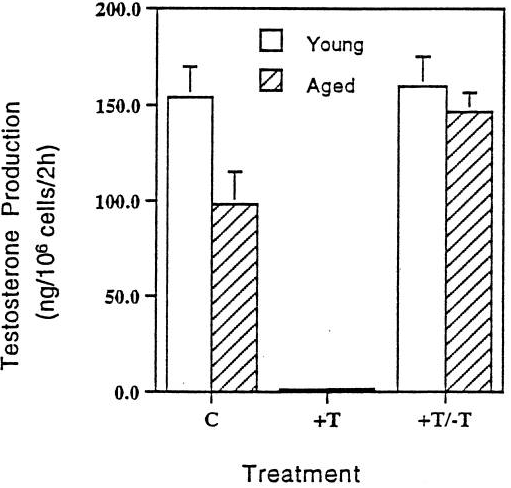
This doesn’t make TRT a recovery therapy. It explains why coming off isn’t automatically catastrophic.
People who end up with low T after stopping testosterone/steroids are due to 3 main reasons:
they had low T to begin with
they use toxic steroids (e.g. tren or other synthetic stuff)
the root cause wasn’t fixed and the problem got worse
The deciding factor is not whether testosterone was used. It’s whether the system underneath improved while it was.
What the Rest of This Article Does (Paid Section)
Everything above explains why testosterone exposes problems.
What follows is about what to do when it does.
The remaining sections walk through the most common issues men attribute to TRT - estrogen symptoms, acne, hair loss, libido crashes, digestive problems, rising hematocrit, blood pressure changes, joint pain - and show:
why these same problems exist even without TRT
which system is actually responsible
and how to prevent it
These are not lifetime protocols. They are pressure controls; ways to quiet symptoms while you decide how deep you want to go on root-cause work.
If you’re on testosterone, this will help you tolerate it better. If you’re not, it will explain why many of these problems show up anyway.